Single agent vs multi agent in AI comes down to one question: does your task split into parts that can run independently, each needing its own large context? If not, use a single agent: one model running in a loop with all the tools, which is cheaper, easier to debug and keeps every decision in one context. Pick a multi agent design (a lead agent handing work to subagents) only when the work is broad and parallel, like research across many sources, or when one agent's prompt and tool list have grown so large that it keeps choosing the wrong tool.
That is also where the three companies that build the most agents have landed. OpenAI tells teams to get as far as possible with one agent first, Anthropic uses multiple agents for its research feature because research parallelizes well, and Cognition argues that most systems should stay single threaded.
What single agent and multi agent mean
A single agent is one model with one system prompt and a set of tools, running a loop: think, call a tool, read the result, repeat until done. Every tool result lands in the same conversation, so the model always sees what it did before. If you have read our guide to building an AI agent from scratch, that loop is a single agent.
A multi agent system splits the work across two or more agents, each with its own instructions, tools and context window. The common shapes are:
| Pattern | How it works | Typical framework |
|---|---|---|
| Lead and subagents | A lead agent calls specialist agents as if they were tools and combines their answers | LangGraph, OpenAI Agents SDK (agents as tools) |
| Handoffs | One agent passes the whole conversation to another, which takes over | OpenAI Agents SDK, LangChain handoffs |
| Router | A classifier step sends each request to one or more specialists | LangChain router, LangGraph |
| Role team | Agents with job titles work through tasks in order or under a manager | CrewAI, AutoGen |
The LangChain multi agent docs add a fifth option that sits between the two: skills, where a single agent loads specialized prompts on demand. It is still one agent, but it gets some of the focus benefits of splitting.
Single agent vs multi agent in AI: the short comparison
| Question | Single agent | Multi agent |
|---|---|---|
| Model calls per task | Fewest | More, because results flow back through a lead |
| Token cost | Lower | Higher; Anthropic measured about 15 times a chat's tokens |
| Shared context | Every step sees every earlier step | Each agent sees only its brief |
| Parallel work | Parallel tool calls only | Whole subtasks run at once |
| Debugging | One trace to read | Several traces plus the messages between them |
| Best fit | Most apps, coding, support, workflows with steps that depend on each other | Broad research, very large tool sets, separate teams owning separate agents |
The case for one agent first
OpenAI's practical guide to building agents is direct about it: "Our general recommendation is to maximize a single agent's capabilities first." It argues that prompt templates (one base prompt with variables) can cover many use cases before you need separate agents.
The guide gives two signals that it is time to split. The first is complex logic: prompts full of if, then, else branches that templates can no longer manage. The second is tool overload, and here the guide makes a useful point: the problem is overlap, not count. It notes that some teams run more than 15 well defined, distinct tools in one agent, while others struggle with fewer than 10 that overlap. So rename and describe your tools clearly before you add an agent.
Cognition, the company behind Devin, goes further in its June 2025 essay Don't Build Multi Agents. Its two principles are to share full context between steps, and to remember that actions carry implicit decisions. When two subagents work in parallel on parts of one task, each makes small choices the other cannot see, and the results clash. Its example is a Flappy Bird clone where one subagent builds a background in the wrong visual style while the other builds a bird that does not match. The author's conclusion is that a single threaded linear agent "will get you very far," with a context compression step for very long tasks.
The case for splitting
Anthropic's engineering post on how it built its multi agent research system is the strongest published case for multiple agents. Its Research feature uses a lead agent that plans and then spawns subagents that search in parallel, each in its own context window, before a final pass adds citations.
On Anthropic's internal research evaluation, a system with Claude Opus 4 as lead and Claude Sonnet 4 subagents beat a single Claude Opus 4 agent by 90.2%. The example task was finding the board members of every Information Technology company in the S&P 500: the team of agents split the list, while the single agent searched one by one and failed. Anthropic also found that token usage alone explained 80% of performance variance on the BrowseComp browsing test. In plain terms, multiple agents mostly win because they let the system spend more tokens on a problem than one context window allows.
The same post is honest about the cost. Agents typically used about 4 times more tokens than chat, and multi agent systems about 15 times more. Anthropic says these systems suit valuable tasks with heavy parallel work, more information than fits one context window, and many complex tools. It also says most coding tasks have fewer truly parallel parts than research, so they are a weaker fit.
Why multi agent systems fail
The best data on failures comes from the Berkeley paper Why Do Multi Agent LLM Systems Fail?. The authors annotated 1,642 execution traces from 7 open source multi agent frameworks, including ChatDev, MetaGPT and AG2, and measured failure rates between 41% and 86.7% on their tasks. They grouped what went wrong into 14 failure modes in 3 categories: system design issues (ignoring the task or role, repeating steps, not knowing when to stop), misalignment between agents (withholding information, ignoring another agent, derailing) and weak verification (stopping early, checking too little or checking wrongly).
Two lessons stand out. Many failures were design problems, not model limits: clearer roles and a final check on the task objective improved one system's success rate with the same model. And verifier agents often did only shallow checks, such as confirming that code compiled.
What we saw when we built both
We built one small support task both ways: "I'm in Canada. Order 42 arrived damaged. Can I get a refund, and how long would a replacement take?" The store's policy tool returns different refund windows and shipping times for Canada and the US, and defaults to US when no country is passed. We used LangChain's create_agent with a scripted model so the runs were repeatable.
| Setup | Model calls | Characters sent to the model | Answer |
|---|---|---|---|
| Single agent, 6 tools | 2 | 3,733 | Correct (Canada policy) |
| Lead plus 2 subagents, country left out of the brief | 6 | 4,102 | Wrong (US policy) |
| Lead plus 2 subagents, country included | 6 | 4,296 | Correct |
The single agent asked for three tool results in one call and answered in a second. The lead needed two calls plus two per subagent. On a task this small the character totals were close, because the single agent paid for six tool descriptions on every call, but the call count tripled. In production that means more latency and more requests billed.
The bigger lesson was the wrong answer. Each subagent saw only the question the lead wrote for it. When that brief left out "Canada," the subagents had no way to know, and the policy tool fell back to its US default. Nothing errored. This is Cognition's context sharing point in miniature, and it is why Anthropic says each subagent needs an objective, an output format, tool guidance and clear task boundaries. Real models can also misread a complete brief.
How to choose for your project
Run through these questions in order and stop at the first yes.
- Can one agent with clearer tool names and descriptions do the job? Try that first. It is the cheapest fix.
- Do the steps depend on each other? If step two needs the details of step one, as in most coding and support work, keep one agent.
- Is the work broad and independent? Researching ten companies, scanning many documents or checking several sources at once are good reasons to fan out to subagents.
- Is the context too big? If tool results or documentation overflow one context window, subagents that return short summaries help. The LangChain docs show subagents processing far fewer tokens than a single agent that loads every skill on a three domain question (about 9K against 15K).
- Do separate teams own separate capabilities? Independent agents with clear contracts can make development easier, even if they cost more to run.
If you do split, copy what worked for Anthropic: write complete briefs, tell the lead how many subagents a task deserves (it suggests one agent for simple fact finding and more than ten only for complex research), have subagents write large outputs to files and return references, and trace every agent. Coding tools follow the same rule of thumb. Claude Code uses subagents mainly to explore and answer questions in a fresh context, which keeps the main conversation short; our guide to Claude Code background agents covers running separate sessions in parallel.
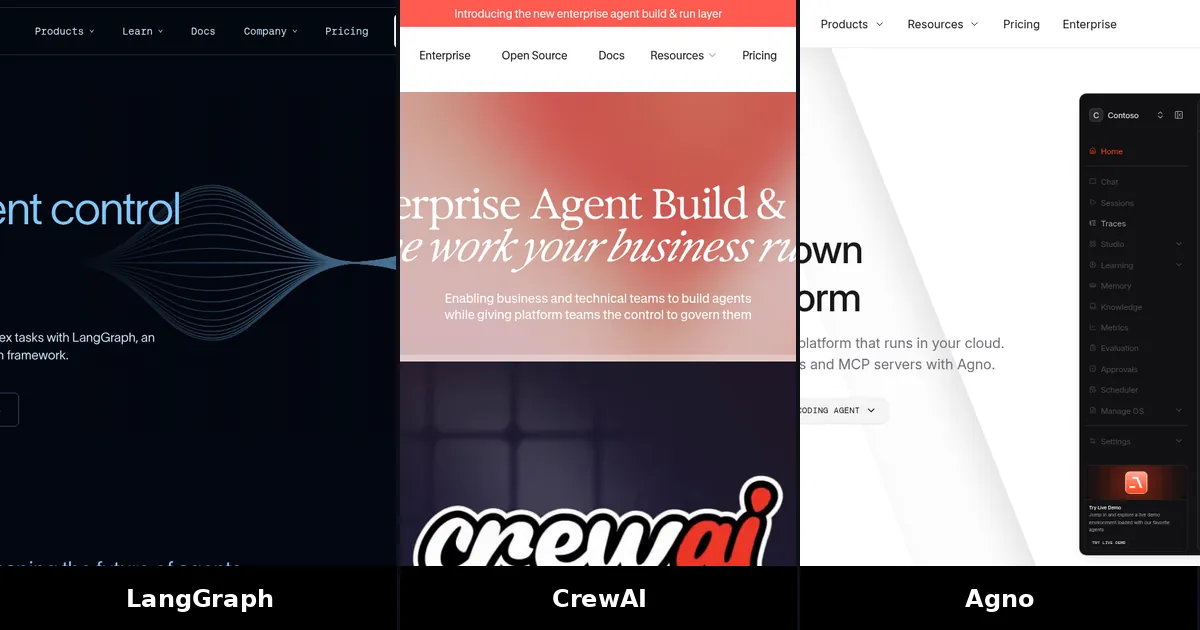
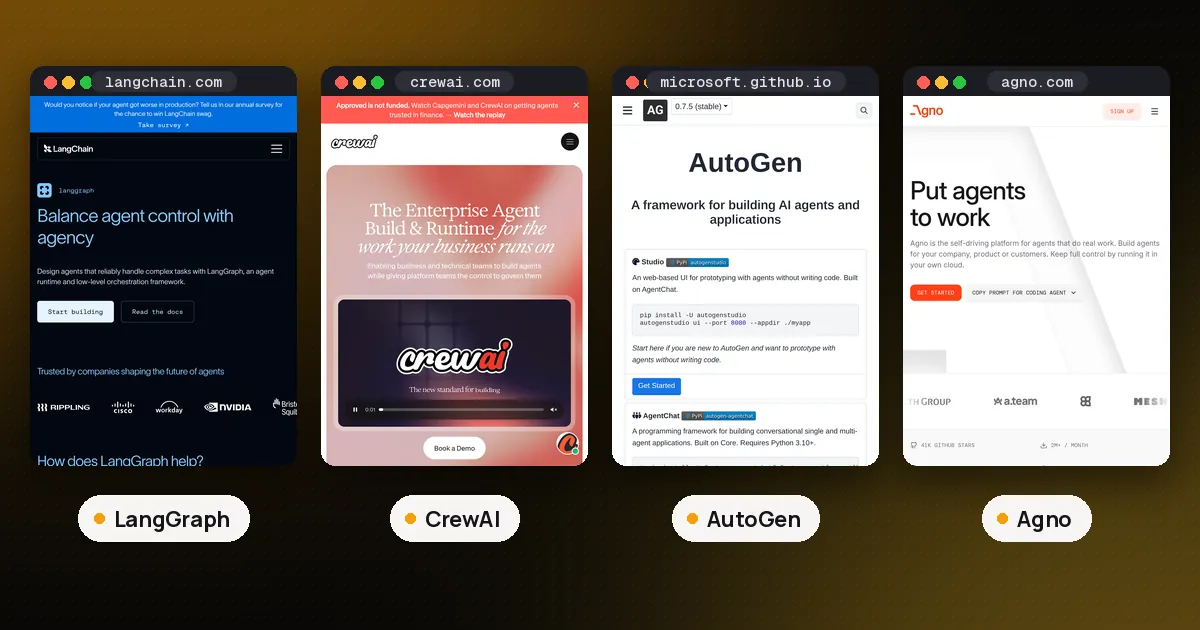
For a framework, LangGraph gives you explicit control over either design, the OpenAI Agents SDK makes agents as tools and handoffs short to write, and Agno and CrewAI offer team abstractions. Our LangGraph vs CrewAI vs OpenAI Agents SDK comparison goes deeper, and if your agents will talk across companies or services, see MCP vs A2A.
FAQ
Is a multi agent system better than a single agent?
Not by default. Anthropic measured a 90.2% gain on broad research, but OpenAI recommends getting the most out of one agent first, and the Berkeley study found multi agent frameworks failing on 41% to 86.7% of its tasks. Multi agent wins on parallel, high value work; single agent wins on most everything else.
How much more do multi agent systems cost?
In Anthropic's data, agents used about 4 times the tokens of a chat and multi agent systems about 15 times. In our scripted test the multi agent version made 6 model calls against 2 for the single agent on the same task.
When should I add a second agent?
When one agent keeps choosing the wrong tool even after you rename and describe the tools clearly, when its prompt is a maze of conditions, or when the task naturally splits into independent pieces that each need lots of context.
Are subagents the same as multi agent?
Subagents are one multi agent pattern: a lead agent calls them like tools and gets a result back. Handoffs, routers and role teams are others. Loading skills into one agent is not multi agent, even though it borrows some of the focus. Running several separate coding agents side by side, each in its own git worktree, is closer to parallel single agents; apps for that are compared in our Conductor alternatives guide.
Which framework is best for multi agent systems?
LangGraph suits teams that want explicit control and durable state, CrewAI suits role based teams you want running quickly, and the OpenAI Agents SDK suits agents as tools and handoffs with little code. All three also build single agents well.