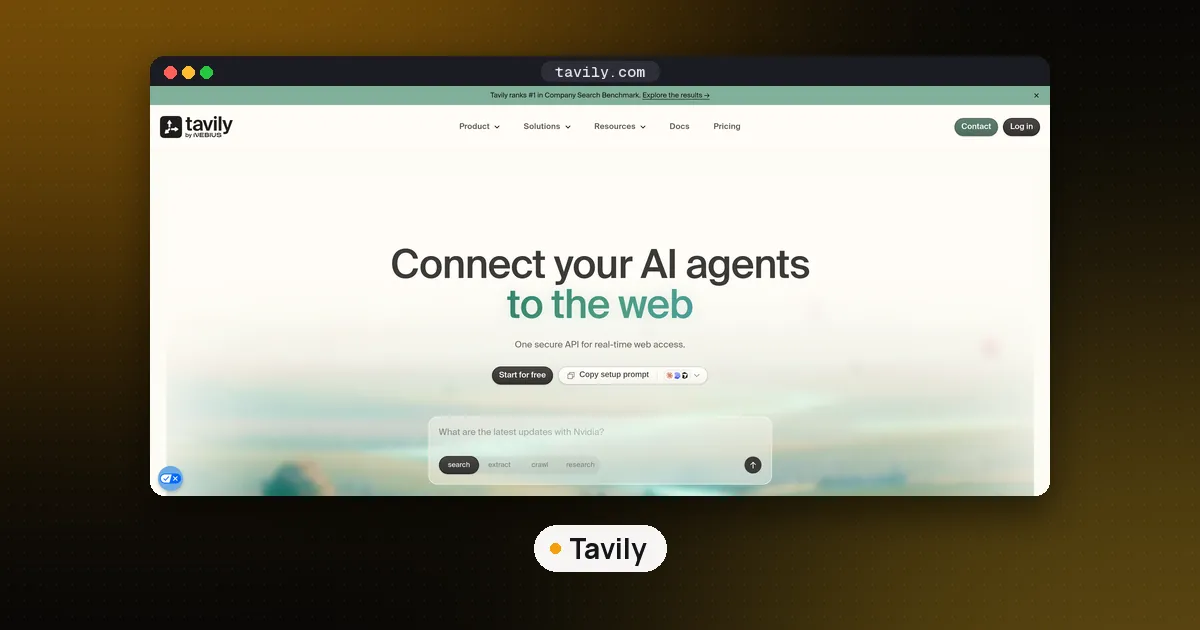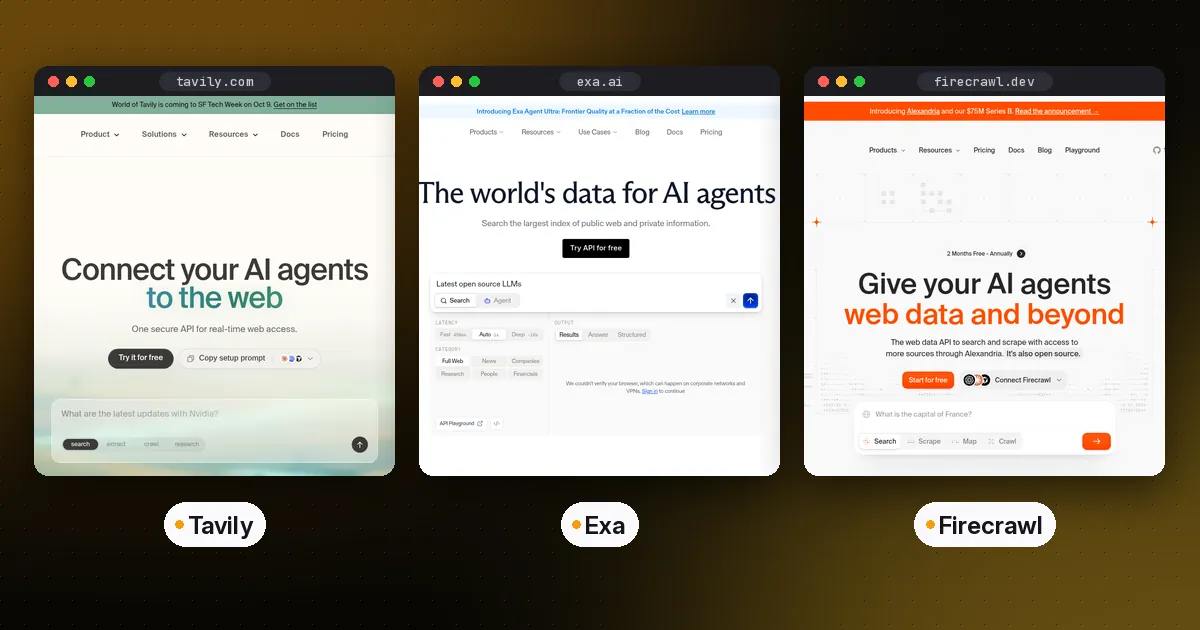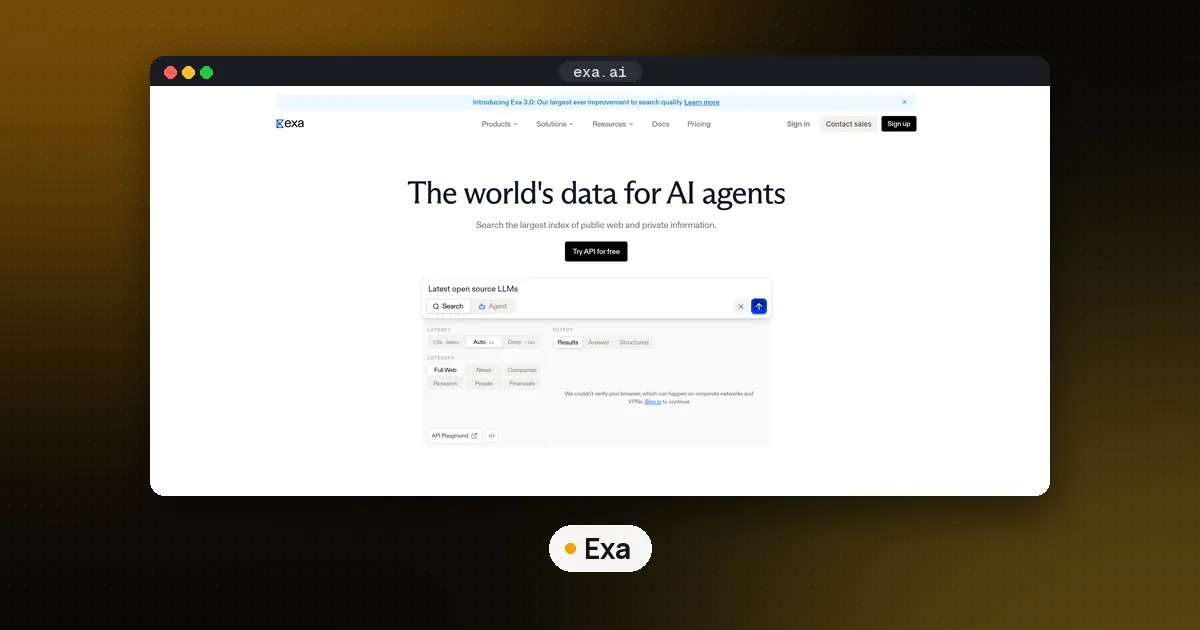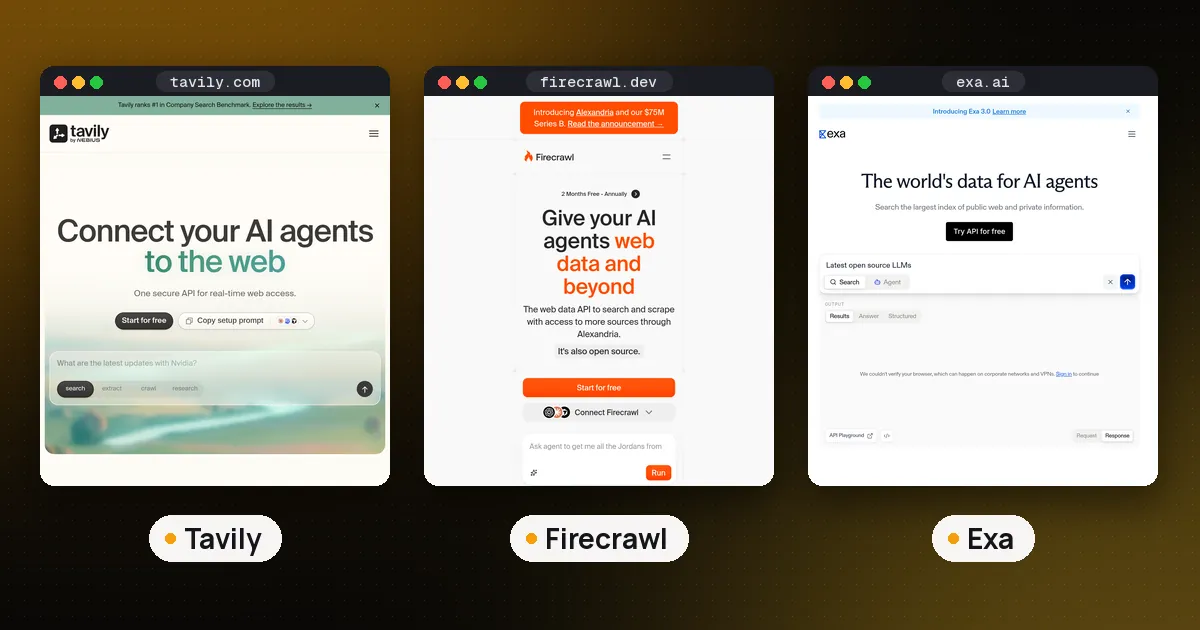
The best self hosted Tavily alternatives right now are Siftdog or Trawl when you want a drop in /search, /extract, /crawl and /map API that the official Tavily SDK can hit by changing one base URL, Firecrawl's open source stack when your agent mainly needs scrape and crawl with JavaScript rendering, and crw when you want a small Rust binary with a Firecrawl style API plus bundled SearXNG. Stay on hosted Tavily when you want neural ranking, Research, and no servers to run. The phrase people type is tavily alternatives self hosted, and the split that matters is API compatible search versus scrape first stacks.
That line is different from our Tavily vs Exa vs Firecrawl guide, which compares three cloud products. Here the question is what you can run on machines you control. Versions and prices below were checked on November 5, 2026 against the Siftdog site and PyPI package, the Trawl README and trawl-search package, Firecrawl's self hosting docs, and Tavily's pricing and credits pages.
Why teams look for self hosted Tavily alternatives
Hosted Tavily is easy: a free Researcher plan with 1,000 credits a month, pay as you go at $0.008 a credit, and paid plans from $30 for 4,000 credits up to $500 for 100,000, per Tavily's pricing. That is enough for many prototypes. It stops being enough when:
- Agent eval loops burn hundreds of searches a day while you tune prompts.
- Compliance says query text or fetched pages cannot leave your network.
- You already run SearXNG or other metasearch and do not want a second search bill.
- You need scrape and crawl volume that is cheaper on your own GPUs and proxies than on a credit meter.
Self hosting is not free in the accounting sense. You pay for CPU, egress, rate limit fights with upstream engines, and the time to keep Compose files healthy. Tavily's own writeup on the cost of self hosted search makes that tradeoff explicit. Use this guide when the tradeoff still favors owning the stack.
Self hosted options at a glance
| Option | Role | Tavily compatible API | License | Search backend | JS rendering | MCP |
|---|---|---|---|---|---|---|
| Siftdog 0.3.0 | Drop in Tavily API | Yes (/search, /extract, /crawl, /map) | MIT | SearXNG | No (static HTML) | Yes (stdio and HTTP /mcp) |
| Trawl 0.1.0 | Drop in Tavily API for local dev | Yes (same four endpoints) | MIT | SearXNG or DDGS | No | Not the main pitch |
| Firecrawl OSS (pin e.g. v2.11.162) | Scrape, crawl, map, search | No (own /v2 API) | AGPL-3.0 (SDKs MIT) | Own stack | Yes (Playwright path) | Yes (point local MCP at your API) |
| crw (fastCRW) | Firecrawl style API in Rust | No (own /v1, migration shim exists) | AGPL-3.0 | Bundled SearXNG | Yes (Lightpanda, Chrome fallback) | Yes |
| Raw SearXNG | Metasearch only | No | AGPL-3.0 | Upstream engines | No | DIY |
Exa stays cloud only, same as Tavily. If you only need a free hosted tier while you decide, see whether the Tavily API is free and the Exa and Firecrawl free plans linked there.
Siftdog: closest drop in Tavily API
Siftdog is an MIT licensed Python service that reproduces Tavily's four core endpoints with the same request and response shapes. Point tavily-python or langchain-tavily at it with api_base_url, keep your tool code, and swap back to https://api.tavily.com when you want the hosted index. Search runs through SearXNG. Extract uses trafilatura. Crawl and map walk a site with depth, breadth, limit and path filters. An MCP server exposes siftdog_search, siftdog_extract, siftdog_crawl and siftdog_map over stdio (uvx siftdog mcp) or HTTP at /mcp, which fits Claude Code and other MCP clients. See our what is MCP explainer if that protocol is new.
Quick start from the project docs:
pip install siftdog
# or: docker compose up after cloning github.com/khsarvar/siftdog
siftdog --port 8000
from tavily import TavilyClient
client = TavilyClient(
api_key="your-siftdog-key",
api_base_url="http://localhost:8000",
)
client.search("latest python release", search_depth="advanced", max_results=5)Honest gaps versus hosted Tavily, from Siftdog's own README: scores come from BM25 rather than a neural reranker, /research is missing, and some Tavily flags are accepted but ignored. SearXNG can return 502 with a list of failing engines when Brave, DuckDuckGo or others rate limit your IP. Set API_KEYS before you expose the port, because extract and crawl fetch caller supplied URLs. Siftdog blocks private, loopback and link local addresses on every redirect and at connect time to stop SSRF and DNS rebinding.
Pick it if you already wrote against the Tavily SDK or LangChain's Tavily tools and want the same shapes on your own hosts under MIT.
Trawl: same API shape for local agent loops
Trawl (trawl-search on PyPI) is another MIT licensed, Tavily compatible API aimed at development. Agent projects hammer search during evals. Burning free credits on that is a tax. Trawl lets you point the same SDK at localhost, then flip the base URL back for production. Compose starts Trawl on port 7300 with SearXNG on 8080. Without Docker you can pip install trawl-search and set TRAWL_SEARCH_PROVIDER=ddgs for a DuckDuckGo based path with no SearXNG process.
pip install trawl-search
TRAWL_SEARCH_PROVIDER=ddgs TRAWL_PORT=7300 trawl serve
from tavily import TavilyClient
client = TavilyClient(api_key="tvly-dev-local", api_base_url="http://localhost:7300")
client.search("Model Context Protocol", max_results=3)Trawl's docs are clear about what is not a quality clone: topic=finance behaves like general, fast and ultra fast depths behave like basic, scores are not comparable to Tavily's across services, and usage.credits is a simulated meter so client accounting keeps working. Optional TRAWL_LLM_BASE_URL can point at Ollama for answers and semantic scores. trawl check prints which providers are up.
Pick it if your main pain is credit burn during local testing, and you want the cheapest path to a compatible /search without standing up SearXNG on day one.
Firecrawl open source: scrape first, self hosted
Firecrawl is still the scrape and crawl pick. The cloud product is proprietary extras on top of an AGPL-3.0 core. The official self hosting guide pins a release (for example v2.11.162), starts Compose, and asks you to verify POST /v2/scrape against https://example.com on port 3002. The default first run turns database authentication off and is for a trusted network only. Production needs durable volumes, TLS, auth and monitoring that Compose does not give you out of the box.
Self hosted Firecrawl covers scrape, crawl, map and search routes with Fetch and Playwright in the default stack. Cloud only pieces (advanced anti bot fire engine, some screenshots and actions, several agent and media formats) stay on Firecrawl Cloud. That matches the FAQ in our cloud comparison: of Tavily, Exa and Firecrawl, only Firecrawl's core was self hostable. The Tavily compatible projects above fill the search shaped gap that FAQ left open.
Pick it if agents need full page markdown, JS heavy sites, or whole site crawls more than they need a Tavily shaped search response.
crw: Rust binary with SearXNG sidecar
crw (product site fastCRW) is an AGPL-3.0 Rust alternative that markets itself against both Firecrawl and Tavily. Compose runs the API, a Lightpanda renderer and SearXNG. Endpoints sit under /v1 (search, scrape, crawl, map). That is not a wire compatible Tavily clone, though the vendor documents a Python migration shim and a compatibility matrix. MCP tools cover search, scrape, crawl and map. Choose it when you want a single static binary, JS rendering, and are fine rewriting clients away from api.tavily.com shapes.
Raw SearXNG: metasearch without the agent layer
Running SearXNG alone gives you multi engine search JSON. It does not give you Tavily's extract, crawl, map, answer, credit fields or MCP tools. Siftdog, Trawl and crw all sit on top of SearXNG (or DDGS) for that reason. Use bare SearXNG when you only need ranked links inside your own code, and add one of the wrappers when agents expect content ready results. If you only want an agent to search through SearXNG, the mcp-searxng server connects it to any MCP client; our free MCP server for web search roundup shows that setup next to hosted keyless options.
What we actually ran on this box
Docker was not available, so we could not bring up SearXNG or Firecrawl Compose. In /tmp/tavily-alt-test we installed siftdog 0.3.0, trawl-search 0.1.0 and tavily-python 0.8.5 on Python 3.13.
- Siftdog started on port 8765. OpenAPI listed
/search,/extract,/crawl,/mapand/health. WithoutSEARXNG_URL,POST /searchreturned HTTP 502 withSearXNG request failed: All connection attempts failed. Extract calls returned HTTP 200 with emptyresultsandfailed_resultsthat said the URL resolves to a non public address. On this machine, public hostnames resolve to198.18.0.1, and Siftdog correctly refuses that range as SSRF protection. A loopback URL was refused the same way. So the server and safety checks ran; live page extraction did not, because of the DNS environment, not because the package failed to start. - Trawl with
TRAWL_SEARCH_PROVIDER=ddgson port 8766 answeredTavilyClient(...).search("Model Context Protocol", max_results=3)with HTTP 200, three results, and the familiar keys (query,results,answer,images,follow_up_questions,response_time,request_id).trawl checkreported SearXNG unreachable and DDGS importable.
That is enough to trust the drop in client path for Trawl, and the failure modes for Siftdog without SearXNG. Re run extract after you have normal public DNS or set the project's private network flag only inside a locked down lab.
How to choose
- Need the official Tavily SDK unchanged? Start with Siftdog (production minded, MCP included) or Trawl (dev loops, DDGS fallback).
- Need JS rendered pages and deep crawls? Firecrawl OSS or crw.
- Need neural ranking, Research, or zero ops? Stay on hosted Tavily (or Exa for category search). Free tier details are in is Tavily API free.
- Need the agent to click and log in? That is browser automation, not search. See Browser Use vs Stagehand vs Playwright MCP.
- Wiring search into LangChain? Keep
langchain-tavilyand passapi_base_urlto your self hosted server, as in how to use Tavily in LangChain.
A common production pattern is hybrid: Trawl or Siftdog (or bare credits) for everyday search in CI and laptops, hosted Tavily for ranking sensitive production traffic, and self hosted Firecrawl for documentation ingest. Measure quality on your own queries before you cut over ranking sensitive flows.
From Ahzy Capital (our own products, labeled as such): Get the free AI Agent Cheat Sheet: 24 copy and paste AI agent setups for 8 types of small business, with prompts and workflows. We make and sell these, so they aren't independent picks.
FAQ
What are the best tavily alternatives self hosted in 2026?
For a Tavily shaped API you run yourself, Siftdog and Trawl. For scrape and crawl on your own machines, Firecrawl's open source stack and crw. Hosted Tavily and Exa remain better when you want managed ranking and no servers.
Is Siftdog a drop in replacement for Tavily?
For /search, /extract, /crawl and /map, yes at the HTTP and SDK layer (api_base_url). Ranking, Research, and some flags differ. Validate quality on your queries before you cut over production.
Can I use the Tavily Python SDK with a self hosted server?
Yes. Both Siftdog and Trawl document TavilyClient(..., api_base_url="http://localhost:PORT"). We confirmed that path with tavily-python 0.8.5 against Trawl 0.1.0 on November 5, 2026.
Do I still need SearXNG?
For Siftdog search, yes (or another SearXNG URL). For Trawl, SearXNG is the default, but TRAWL_SEARCH_PROVIDER=ddgs works without it for light local use. Firecrawl and crw bring their own search paths in Compose.
Is self hosted search actually free?
There is no per credit bill from Tavily, but you still pay for machines, bandwidth, and engineering time, and upstream search engines can rate limit your IP. Hosted free tiers (1,000 Tavily credits a month) are often cheaper until volume or compliance forces the move.
When should I keep paying for Tavily?
When neural ranking, Research, finance or news tuned topics, and zero ops matter more than data residency or credit burn. Many teams keep Tavily in production and use a self hosted compatible API only in development.